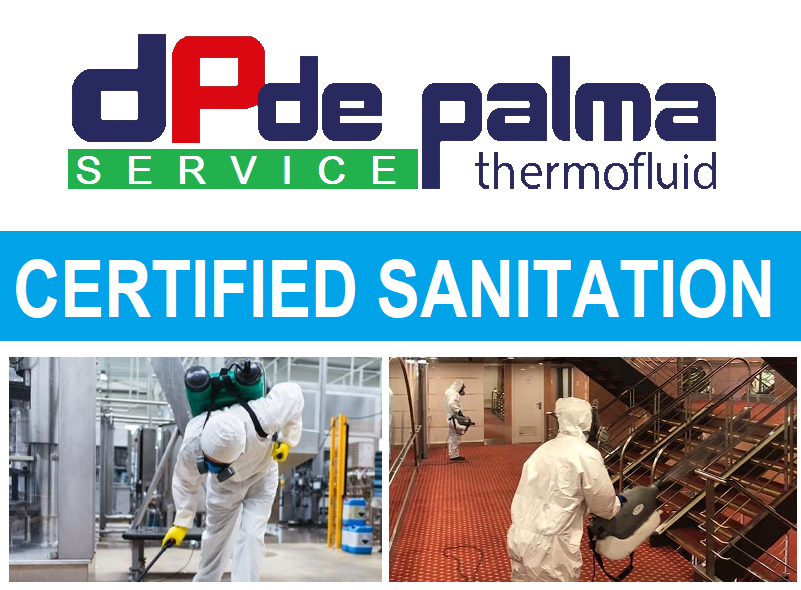
When it comes to Industrial or Marine Environments, ordinary cleaning is not enough but real and certified safety is required: De Palma Thermofluid Service protects people’s health and guarantees the healthiness of environments through its specialized staff.
Over the years, we have become the main partner for numerous manufacturing and marine companies. Our added value lies in a team of constantly updated professionals who apply rigorous operational protocols, ensuring effective, traceable results that are fully compliant with current laws and regulations.
Intervention Areas
– De Palma Thermofluid Service has developed specific expertise to intervene in complex scenarios where precision is vital:
– Ship’s Areas: we manage certified interventions on cargo ships, cruise ships, and ferries, handling “IMO/ISPS” standard deratization and deep sanitization of cabins and operational areas.
– Corporate Fleets: we protect your collaborators with cold nebulization protocols specifically designed for transport vehicles.
– Industrial Environment: we intervene in warehouses and food production plants, contexts where adherence to hygienic-sanitary requirements is fundamental.
– Biological Risks: we are specialized in the management of dangerous pathogens, such as “Hantavirus“, starting from risk analysis to final certified remediation.
.
Innovation Respecting the Environment
To obtain maximum effectiveness without harming the ecosystem, we focus on cutting-edge technologies: we use “superheated dry steam” for deep sterilization without the abuse of chemical agents, as well as professional nebulizers for capillary coverage of biocides.
.
Why Rely on Us?
Choosing De Palma Thermofluid means relying on expert consultants, not simple executors. Every activity starts with a detailed inspection to map the specific critical points of your facility. The goal is not only to solve an emergency, but to build together a path of continuous and personalized prevention.
.
Your Safety is Our Absolute Priority
If you wish to best protect your working environments and your collaborators, do not hesitate to contact us: we are at your complete disposal for a targeted and no-obligation consultation.
.
*********************************************************************************************
1. What are the key regulatory standards for maritime pest control and sanitization?
In the global shipping industry, compliance with international health and security protocols is mandatory for all vessels. Professional maritime services focus on providing certified interventions for cargo ships, cruise liners, and ferries.
A critical requirement for maritime safety is deratization performed according to IMO/ISPS standards, ensuring that pest control measures are legally compliant, effective, and fully traceable.
2. How is deep sterilization performed on ships without harmful chemical agents?
Modern maritime sanitization prioritizes the protection of the ecosystem by utilizing innovative technologies that avoid the abuse of harsh substances. One of the most effective methods for deep sterilization is superheated dry steam, which eliminates pathogens without relying on aggressive chemical agents.
For broader coverage, nebulizers are used to ensure a uniform and capillary distribution of biocides across both passenger cabins and technical operational areas.
3. Why is a technical inspection vital for effective naval sanitization?
Effective sanitization in high-criticality contexts, such as the marine sector, requires maximum precision rather than a generic approach. A professional service begins with an in-depth inspection to accurately map the specific criticalities and biological risks of a vessel.
This technical assessment allows for the creation of a customized prevention plan tailored to the unique requirements of cabins and operational spaces, ensuring long-term safety.
4. How are dangerous biological pathogens like Hantavirus managed in the marine industry?
The management of high-risk biological threats on vessels requires specialized expertise and rigorous, certified protocols. The process for controlling dangerous pathogens, such as Hantavirus, involves a comprehensive risk analysis followed by certified remediation.
These specialized services ensure the healthiness of the environment for both crew and passengers, keeping the vessel perfectly aligned with current health regulations.
–
Tags: